Cleaning Clear Aligners in Japan: What Works and What Warps
Reviewed by Dr. Ryosuke Murai, DDS, MSD — Prosthodontist, trained at Indiana University School of Dentistry (U.S.). Last updated October 2026.
The safest way to clean clear aligners is to rinse them in cool water and brush them gently every time they come out, then clean your teeth before they go back in. Hot water, abrasive pastes and harsh soaks are what damage the plastic. This guide is for self-pay adults having clear aligner treatment in Japan who want trays that stay clear, fit as planned and do not undermine the result. We explain what the research supports, what to avoid and how we check trays at Eden Dental Office in Nagoya.
Why trays need their own cleaning routine
An aligner sits against your teeth for 20 to 22 hours a day, holding saliva and food film against enamel. The plastic is a thermoplastic, so unlike a ceramic crown it can warp with heat and scratch with grit. A tray that is rough, cloudy or distorted is not only unattractive; it can fit less accurately and hold more bacterial film against the teeth it is meant to move. Cleaning is therefore part of treatment, not housekeeping.
Cleaning also protects your teeth. Enamel under a dirty tray is exposed to plaque for many hours, so people who brush trays but skip their own teeth before reinserting them lose much of the benefit. A related point we raise with patients who already have bonded or ceramic work is covered in our guide to aligners with crowns, veneers or implants.
What the research says about cleaning methods
Evidence is thinner than most marketing suggests. A 2026 laboratory study in BMC Oral Health compared six cleaning methods on thermoplastic aligner material and found that toothbrushing, alone or with a cleaning solution, removed the most Streptococcus mutans biofilm without weakening the material, although surface roughness increased slightly with repeated brushing. Ultrasonic cleaning was only partly effective.
In patients, the picture is modest. A prospective study of 22 people treated with aligners compared five routines over five weeks and found no statistically significant difference between the cleaning methods in bacterial counts. Our reading is that no soak replaces the basics: consistent, gentle mechanical cleaning, done every time, matters more than the product.
| Method | What it does well | Main concern |
|---|---|---|
| Cool water rinse after every removal | Clears saliva and loose debris before it dries | Not enough alone |
| Soft brush, no paste or non-abrasive paste | Removes biofilm most reliably in the research | Slight surface roughening over time |
| Cleaning tablets or soaks | May add chemical action | No clear added benefit shown in patients; some products dull plastic |
| Hot water, boiling, dishwasher | None worth the risk | Warps the tray and spoils fit |
| Abrasive or whitening toothpaste | Looks thorough | Scratches plastic and causes cloudiness |
What actually damages a tray
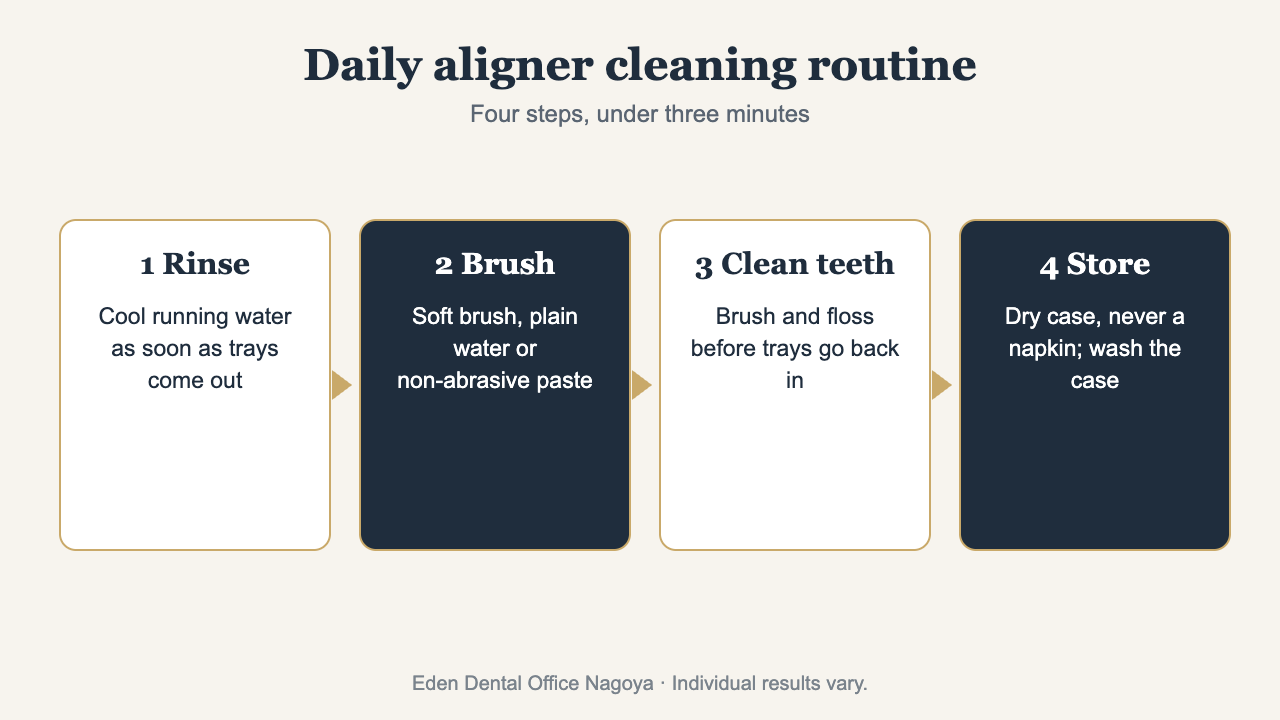
Heat is the main risk. Leaving trays on a sunlit dashboard, a radiator or in a cup of hot tea can change their shape slightly, and a slightly changed tray no longer applies the planned force. Boiling to sterilize them is a common mistake, as is putting them through a dishwasher. If a tray has been warmed and now feels loose or tight in a new way, do not push on; message us, and we will decide whether to continue with it or remake it.
Abrasion is the second risk. Gritty toothpastes, charcoal products and stiff brushes scratch the surface, and scratches hold stain and film. Coloured drinks are the third. Coffee, tea and red wine can discolor trays within hours, so the usual rule is to remove them and drink only plain water while wearing them. Patients who also whiten should read our note on whitening during clear aligner treatment.
Cloudiness, odor and stain: what is normal
A slight haze after a week or two is common and does not by itself mean a problem. A persistent smell, a sticky surface or white deposits are signs that film is not being removed, and they are worth a closer routine rather than a stronger chemical. Yellowing of the plastic is usually stain from drinks or tobacco. Because each tray is replaced on a schedule, the practical goal is a tray that stays clean and accurate until its changeover date, not one that looks new indefinitely.
How we check trays at Eden
At Eden we look at the trays themselves at every check, not only at your teeth. We examine fit at the attachments, look for warping, cracks and heavy film, and watch for patterns such as white marks near the gumline that point to plaque trapped under a tray. Patients who travel to us from other cities send tray photographs between visits, and we explain the limits of that review in what remote review can and cannot judge. The same gentle rules apply later, because a retainer is cleaned exactly like a tray; our guide to retainers after clear aligners covers that stage.
A routine that takes under three minutes
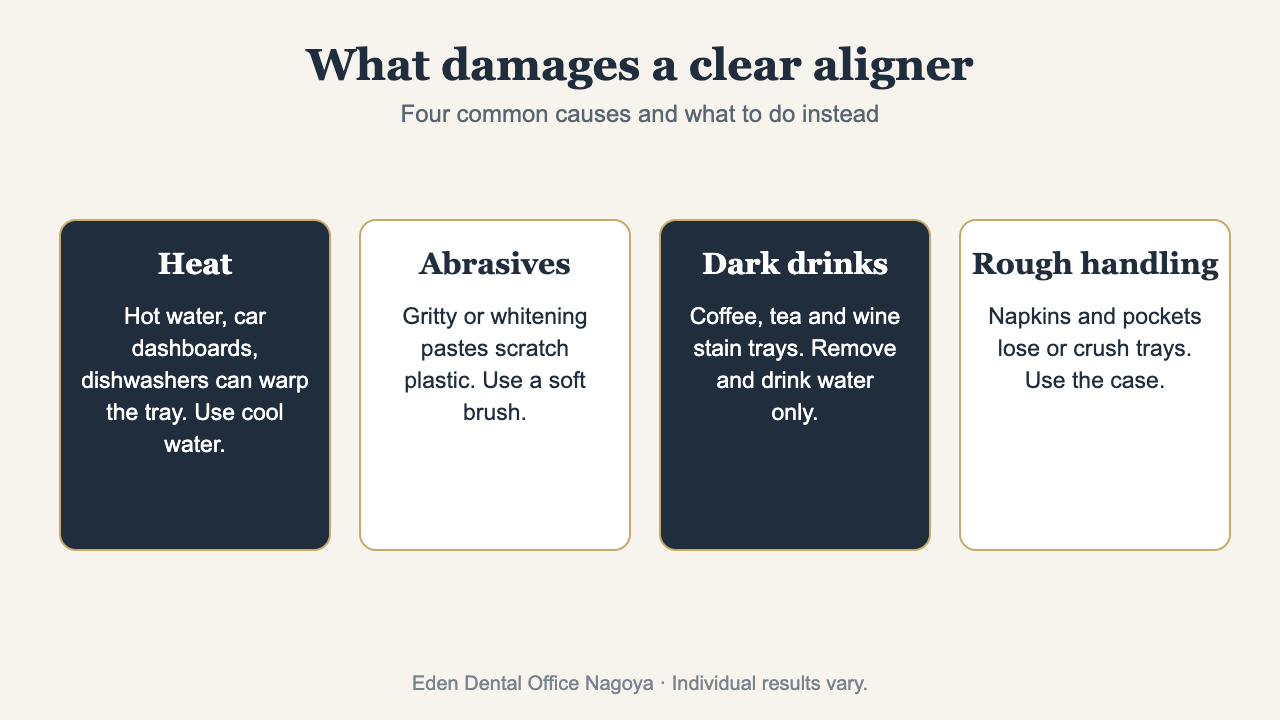
Most patients do better with a short routine they will actually repeat than with an elaborate one they abandon. We suggest four steps. First, when you remove the trays, rinse them under cool running water straight away, before saliva dries into a film. Second, brush them gently with a soft brush, inside and out, using plain water or a very small amount of non-abrasive paste. Third, brush and floss your own teeth before the trays go back in, so that you are not sealing food residue against enamel. Fourth, when the trays are out for meals, keep them in their case, never wrapped in a napkin, which is how many trays are lost or crushed.
Once a day, a short soak in cool water with a mild cleanser made for aligners or retainers is reasonable if you like the freshness, but treat it as optional. If you do use one, rinse thoroughly afterwards and stop if the plastic looks dull or the product leaves a taste. Never combine products, and never use alcohol-based rinses or bleach on the plastic. When you travel, carry a spare case and a travel brush, because the days away from home are when routines slip and trays are most often damaged.
Patients sometimes ask whether it matters if they clean the case. It does. A case that is never washed re-contaminates a clean tray every time it goes back in, so wash it with soap and cool water and let it dry. Finally, remember that aligners are only one half of oral hygiene. Gum inflammation and early decay are more common when brushing between trays is rushed, so if you notice bleeding, tenderness or chalky marks near the gumline, tell us at your next check rather than waiting for the following one.
What this costs
Routine cleaning needs no special product, and we do not sell one. Replacing a damaged or lost tray, where needed, is discussed in the written estimate we provide in English before treatment begins, and the overall structure of fees is explained on our treatments page. We would rather you ask about an unusual product before buying it than after.
Frequently Asked Questions
Can I clean clear aligners with hot water?
No. Warm or hot water can soften and distort thermoplastic, so use cool or lukewarm water and rinse after every removal.
Is toothpaste safe on clear aligners?
Use a small amount of non-abrasive paste or none. Abrasive or whitening pastes can scratch the surface, which makes trays look cloudy and hold more film.
Why are my aligners cloudy or smelling?
Light clouding is common with wear. Odor usually means biofilm is building up, so brush the trays more carefully and clean your teeth before reinserting.
Can I use mouthwash or denture tablets?
Ask us first. Some products stain or dull the plastic, and the evidence for added benefit over careful brushing is limited.
Should I replace a stained tray early?
Not on your own. Tell us at the next check, because changing the sequence without review can interrupt the planned tooth movement.
Risks and limits
Brushing can roughen plastic slowly, and no routine removes all film. Poor cleaning can contribute to plaque, gum irritation and decay, and overheated or damaged trays can interrupt tooth movement and extend treatment. This article is general education, not a personal recommendation. Individual results vary. If you would like us to check your trays or plan treatment, start with our treatment overview and message us on WhatsApp.
More on this topic: Aligner Guides — every article we have published in this cluster, grouped by stage.