All-on-4 Zirconia vs Acrylic Bridge in Tokyo & Japan
Reviewed by Dr. Ryosuke Murai, DDS, MSD — Prosthodontist, trained at Indiana University School of Dentistry (U.S.). Last updated July 2026.
Patients researching full-arch implant treatment often spend months comparing implant brands and surgeons, then learn at the final planning stage that they must also choose an All-on-4 bridge material. That decision — acrylic-titanium hybrid or monolithic zirconia — determines how the bridge feels in your mouth, how it ages, and what you will spend on upkeep over the next decade. The short answer: acrylic hybrids are lighter, simpler to repair, and lower in upfront cost; monolithic zirconia resists wear and staining far better and usually needs fewer remakes. Which one suits you depends on your bite, your opposing teeth, and how you value long-term ownership against initial outlay. This article, part of our All-on-4 in Japan guide, is written for self-pay patients who want that trade-off explained properly.
Two materials, two very different bridges
An All-on-4 restoration has two components: four implants anchored in the jaw, and the full-arch bridge fixed onto them. The implants are hidden; the bridge is what you see, chew with, and clean every day. If you are still deciding between a fixed bridge and a removable option, start with our comparison of All-on-4 versus implant overdentures — this article assumes you have chosen fixed.
Acrylic-titanium hybrid: the flexible workhorse
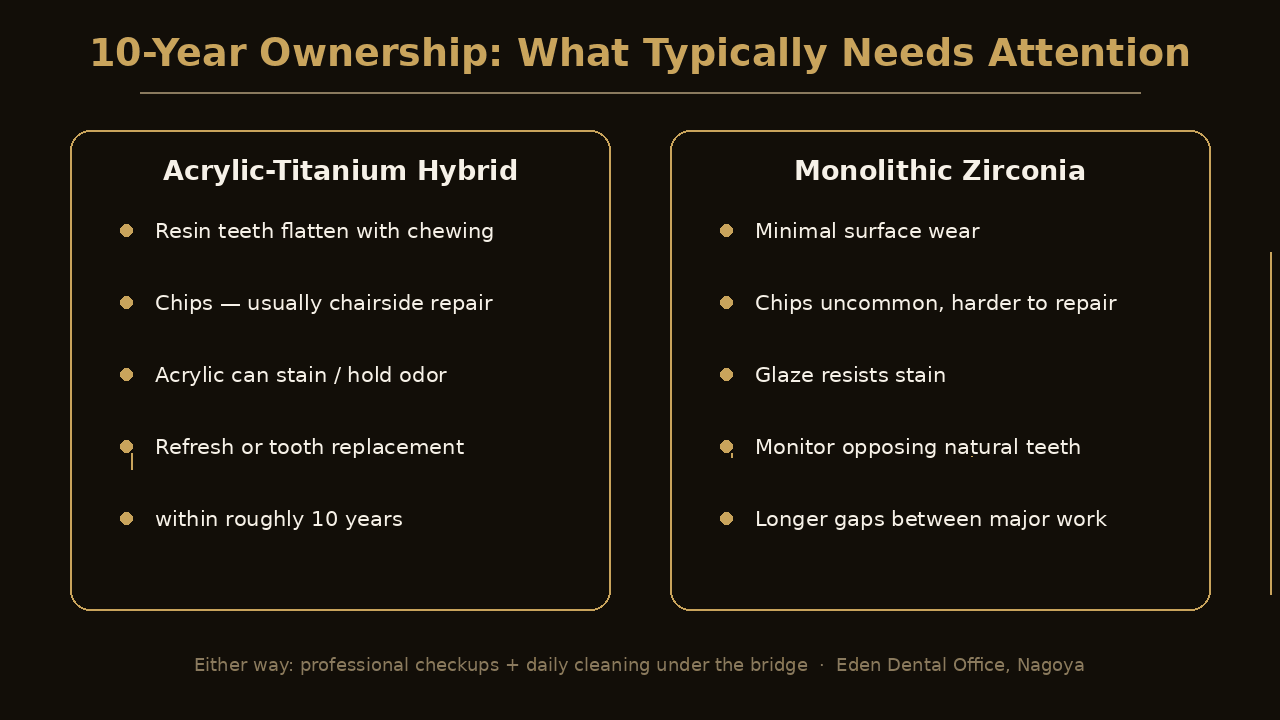
The hybrid design wraps a milled titanium bar in pink denture acrylic, with individual resin teeth set into it. It has been the standard full-arch material for decades. Its virtues are practical: the acrylic absorbs some chewing shock, the bridge is light on the implants, and when a resin tooth chips — which happens — it can often be repaired chairside in a single visit. Its weakness is time. Resin teeth wear down measurably over years of chewing, the acrylic can stain and hold odor if hygiene slips, and most hybrids need teeth replaced or the entire wrap refreshed within roughly a decade.
Monolithic zirconia: milled from a single block
A monolithic zirconia bridge is digitally designed and milled from one solid block of zirconium dioxide ceramic, then stained and glazed for gum and tooth color. There is no acrylic wrap and there are no separately set teeth, so there is nothing to debond. Zirconia’s flexural strength — roughly 1,000 MPa or more depending on the formulation — makes fracture of the arch itself uncommon. It keeps its polish, resists stain, and feels closer to natural enamel under the tongue. The trade-offs: it is heavier, it transmits more chewing force, it costs more to produce, and while chips are rare, a significant fracture usually means remaking the bridge rather than patching it.
Side by side: how the two bridges compare
| Factor | Acrylic-titanium hybrid | Monolithic zirconia |
|---|---|---|
| Construction | Titanium bar + acrylic + resin teeth | Single milled ceramic body, stained and glazed |
| Weight and feel | Lighter; slightly bulkier contours | Heavier; thinner, smoother, more tooth-like |
| Wear over time | Resin teeth flatten with years of chewing | Minimal surface wear; holds anatomy |
| Staining and odor | Acrylic can absorb stain and odor | Glazed ceramic stays cleaner |
| Typical repairs | Chipped teeth often fixable chairside | Chips uncommon but harder to repair; large fracture = remake |
| Expected service pattern | Tooth replacement or refresh within ~10 years | Longer intervals between major work |
| Upfront cost | Lower | Higher |
| 10-year cost pattern | Lower entry, more maintenance events | Higher entry, fewer interventions |
What the research says
The published evidence supports what clinicians see. A systematic review of full-arch monolithic zirconia implant prostheses reports high short- to medium-term survival, with fracture of the zirconia framework itself uncommon; most reported complications involve minor chipping — largely in designs with added porcelain veneering — or small maintenance items such as screw-access fillings. For hybrids, a long-term study of metal-acrylic fixed complete prostheses found the implants themselves survived very well, while the most frequent complications were prosthetic: worn or fractured resin teeth needing repair or replacement over the years. In other words, neither material threatens the implants — the difference is how much prosthetic maintenance you sign up for.
How we plan bridge material at Eden
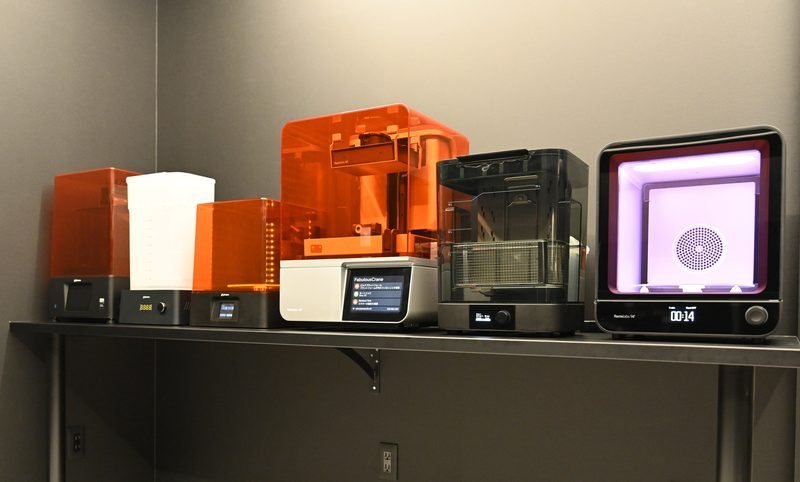
In our clinic, the material question is settled by data rather than habit. Every full-arch case starts with Digital Smile Design and a CT-based digital plan for Straumann BLX or TLX implants placed with 3D-printed surgical guides. On surgery day you receive a light acrylic provisional bridge produced by our in-house lab — the standard sequence described in our All-on-4 timeline article. Those months with the provisional are diagnostic: we watch how you chew, whether you clench or grind, how your opposing teeth respond, and how the acrylic wears. A patient who has visibly flattened a provisional in four months is telling us the final bridge should be zirconia; a patient with a complete denture in the opposing jaw and a gentle bite may be well served by a hybrid. Because design and milling happen in-house, we can also adjust contours for cleanability before anything is final — which matters, as our guide to cleaning an All-on-4 bridge explains.
What an All-on-4 bridge costs in Japan
Full-arch treatment in Japan is self-pay, and bridge material is one of the main drivers of the final fee — a monolithic zirconia arch involves more milling time, more material cost, and more lab hours than an acrylic hybrid. Rather than quote a single number here, we break down the components honestly in our All-on-4 fee breakdown for Japan and publish our standing prices on the fee page. Before any treatment begins, you receive a written estimate in English that states the bridge material, what is included, and what a later material upgrade would involve. Some patients deliberately budget in two stages: hybrid first, zirconia at replacement time — the implants do not change, only the bridge.
Shade and translucency matter more above the lip line, a point we expand on in All-on-4 upper vs lower jaw.
Whichever material you choose, it helps to know how the bridge behaves if a supporting fixture is ever lost — see implant failure under an All-on-4 bridge.
The same trade-off between translucency and durability governs front-tooth work, where porcelain veneers are chosen between feldspathic, lithium disilicate and zirconia on much the same reasoning.
The same durable-versus-repairable trade-off appears on front teeth: see how bonding and ceramic veneers differ in longevity and ten-year cost.
Readers comparing ceramic choices for individual front teeth rather than a full arch can start with how no-prep and conventional veneers differ.
Frequently Asked Questions
Which lasts longer, an acrylic or zirconia All-on-4 bridge?
Zirconia generally holds its form and finish longer. Acrylic hybrids remain serviceable but usually need tooth replacement or refurbishment within about a decade of full-time chewing.
Can a zirconia All-on-4 bridge be repaired if it chips?
Small chips can often be smoothed or bonded. A structural fracture usually requires remaking the bridge, which is why zirconia cases are planned around your bite forces from the start.
Does a zirconia bridge feel heavier than acrylic?
It weighs more, but on a fixed bridge most patients notice smoothness and thinness rather than weight. Many describe zirconia as feeling closer to natural teeth.
Can I start with acrylic and switch to zirconia later?
Yes. The implants and often the connection design stay the same, so a hybrid can be succeeded by a zirconia arch at its natural replacement point.
Does the material change how I clean the bridge?
The routine is the same — brushing plus daily cleaning under the bridge. Zirconia’s glazed surface holds less plaque and stain, but no material removes the need for that routine.
Risks, limits, and a sensible next step
Every full-arch prosthesis carries risks regardless of material: chipping or fracture of the bridge, screw loosening, wear of opposing teeth (particularly against zirconia), and peri-implant inflammation if hygiene lapses. Heavy clenching or grinding raises all of these risks, and a night guard is often part of the plan. Costs, timelines, and outcomes depend on your anatomy, bite, and opposing dentition. Individual results vary.
If you are weighing materials for a full-arch case — whether you live in Nagoya, elsewhere in Japan, or abroad — our implant treatment page explains how we structure a consultation, and you can reach us in English on WhatsApp to arrange a written, material-by-material estimate before you commit to anything.
More on this topic: Implant Guides — every article we have published in this cluster, grouped by stage.