
Dental Implant Aftercare in Japan: Your First Two Weeks
Reviewed by Dr. Ryosuke Murai, DDS, MSD — Prosthodontist, trained at Indiana University School of Dentistry (U.S.). Last updated August 2026.
Dental implant aftercare in the first two weeks comes down to a short list of disciplined habits: protect the blood clot for 24 hours, keep the site clean without scrubbing it, eat soft food on that side, and do not smoke. Follow those four rules and an uncomplicated single-implant site usually feels close to normal within a week. This guide sets out the day-by-day instructions we give our own patients — what to do in the first 24 hours, how to rinse and brush, what to eat and when, and which symptoms justify a message to the clinic. It is written for self-pay patients treated anywhere in Japan, including those who travel to a prosthodontist-led implant clinic and fly or take the Shinkansen home afterward. For what the surgery itself involves, start with our full walk-through of the implant procedure, timeline and recovery in Japan.
The first 24 hours: protect the clot
Everything in early healing depends on the blood clot that forms over and around the surgical site. The first day’s rules exist to keep it in place.
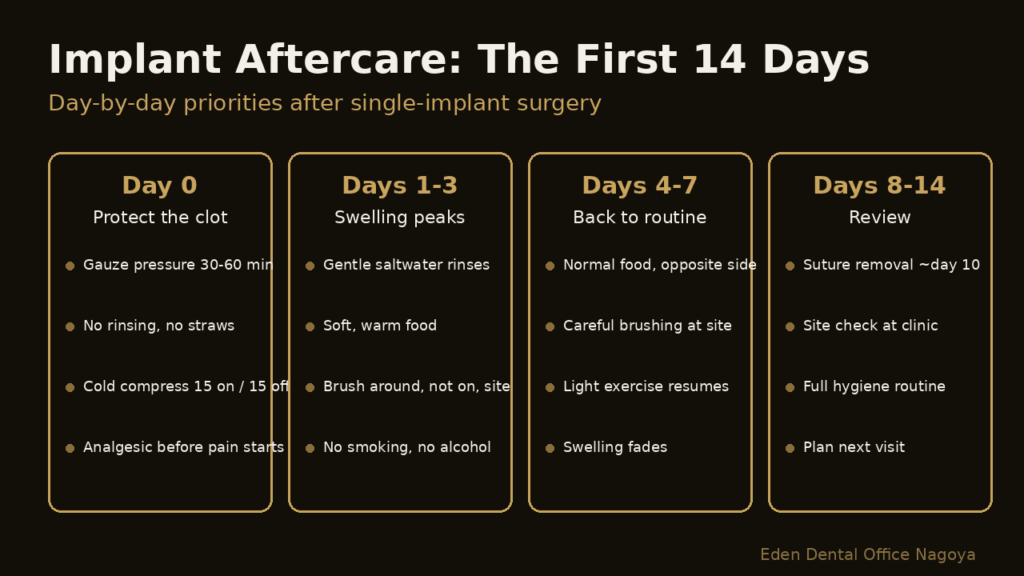
Bite gently on the gauze pack for 30 to 60 minutes after you leave the chair, and replace it once if oozing continues; slight blood-tinged saliva into the evening is normal. Do not rinse, spit forcefully, or drink through a straw on day 0 — the suction and swirling can lift the clot. Skip hot drinks and hot baths, which raise local blood flow, and keep your head elevated on an extra pillow the first night. Take the first dose of your analgesic before the local anesthetic wears off rather than after pain arrives; staying ahead of discomfort takes less medication than chasing it. A cold compress against the cheek — 15 minutes on, 15 off, during the first evening — blunts the swelling that would otherwise peak two days later. Numbness from the anesthetic should fade within a few hours; do not chew until it does, because you cannot feel a bitten cheek.
Days 2–7: swelling, food and keeping the site clean
Swelling is not a complication; it is a schedule. It builds for roughly 48 to 72 hours, peaks around day 2 or 3 — often with some cheek bruising that drifts downward as it fades — and then recedes through the week. Discomfort follows the opposite curve: worst the first evening, clearly better by day 3.
| Period | Eat | Avoid | Cleaning |
|---|---|---|---|
| Day 0 | Cool, soft: yogurt, smoothies (spoon, no straw), lukewarm soup | Hot, spicy, crunchy; alcohol; straws | No rinsing; brush other teeth only |
| Days 1–3 | Soft and warm: eggs, tofu, noodles cut short, fish, rice porridge | Chewing on the surgical side; seeds and grains that lodge in wounds | Gentle saltwater or prescribed rinse after meals; soft brush near, not on, the site |
| Days 4–7 | Normal texture on the opposite side | Hard crusts, nuts, ice cubes over the site | Resume careful brushing around the site as tenderness allows |
| Week 2 | Progressively normal diet | Deliberate chewing directly on a healing cap | Full hygiene routine; suture removal around day 10 if placed |
Cleaning deserves precision, because patients tend to err in both directions — scrubbing the wound out of diligence, or avoiding the whole quadrant out of fear. From day 1, brush every tooth normally except the one or two adjacent to the site, which get a soft brush and a light touch; plaque left on neighboring teeth feeds the bacteria you are trying to keep out of the wound. Rinsing starts on day 1, not day 0: lukewarm salt water after meals is the default, and an antiseptic rinse is prescribed case by case. The choice of antiseptic is genuinely debatable — a 2025 randomized comparison of chlorhexidine and povidone-iodine rinses in implant patients, published in BMC Oral Health, found both workable with different patient-reported trade-offs (chlorhexidine can temporarily stain teeth and alter taste). Use what your surgeon prescribed, for as long as prescribed, and nothing stronger.
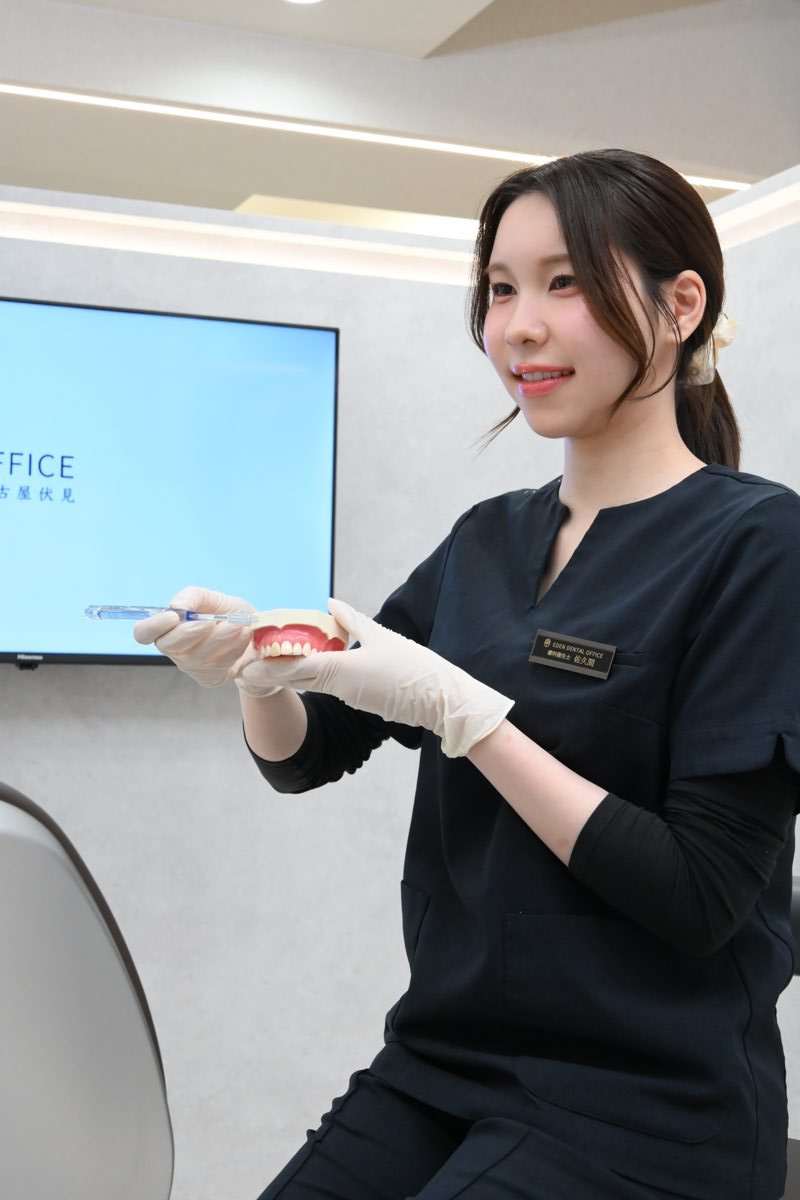
At Eden Dental Office, every surgical patient leaves with a one-page aftercare sheet in English and a direct WhatsApp line to the clinic, and we ask for a photo of the site on day 3 from patients who traveled to us from Tokyo, Osaka or overseas — a 30-second check that replaces a 300-kilometer trip when healing is on track. Because our lab and planning are in-house, the day-10 review is also where we confirm the restorative schedule, so remote patients know their next visit date before they leave the first one.
Smoking, alcohol, exercise and flying home
If you change one behavior for your implant, make it smoking. Nicotine constricts the small vessels that early healing depends on, and the association is not marginal: a 2026 systematic review in Clinical Oral Implants Research examined tobacco smoking and newer smoke-free products as risk factors for dental implants and found smoking consistently linked to higher rates of implant failure and peri-implant disease — and heated or vaped nicotine products are not an established safe alternative. The minimum request is no smoking for 72 hours; the honest request is to use the implant as a reason to stop. We say this plainly during planning, not after surgery.
Alcohol is off the menu for the first 72 hours — it interferes with clotting and with most analgesics. Exercise follows a simple rule: nothing that raises your heart rate hard for the first three to four days, because a pounding pulse reopens wounds; walking is fine immediately. For fly-in patients, short domestic flights the day after surgery are generally acceptable for an uncomplicated single implant, though we prefer patients stay within reach until the next morning’s check; after sinus-adjacent work or grafting — the situations covered in our article on bone grafts and sinus lifts in Japan — flying is a case-by-case decision your surgeon should make explicitly, not something to assume.
Normal healing or a reason to call?
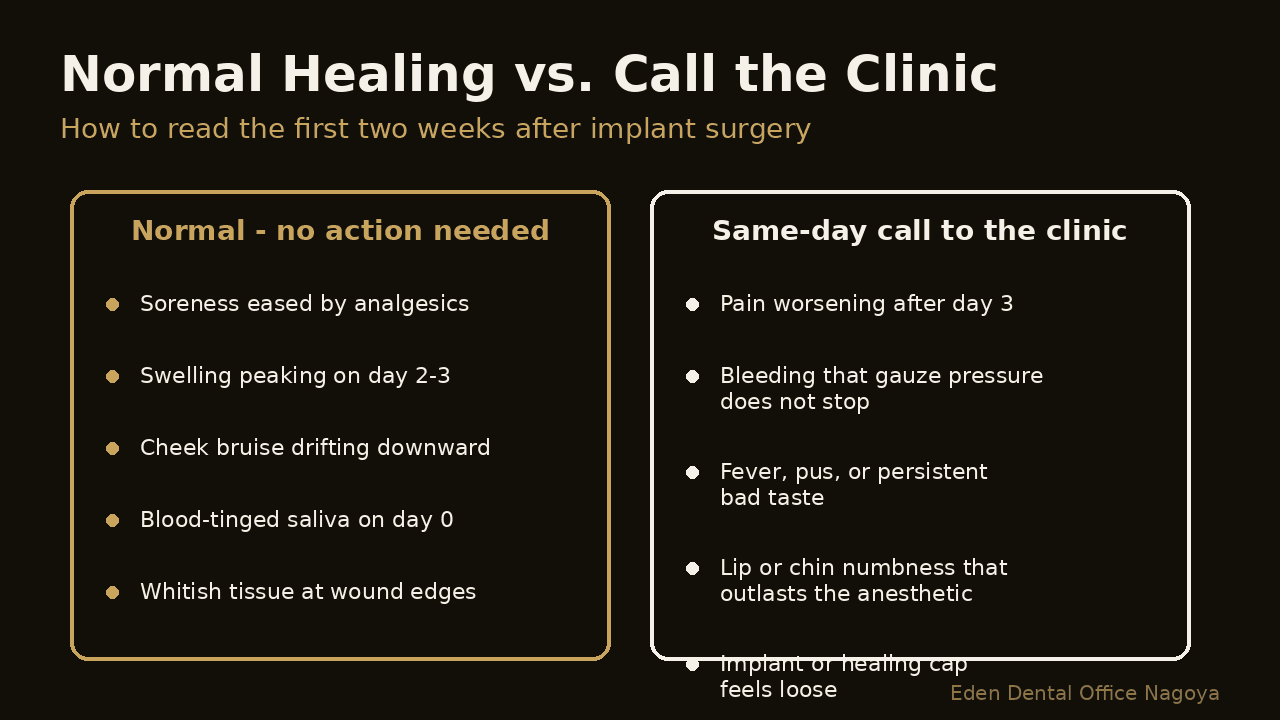
Most of what worries patients in week one is normal: soreness that responds to analgesics, peak swelling on day 2–3, a bruise on the cheek, small blood streaks in saliva on day 0, and whitish tissue at the wound margins as it matures. The short list that justifies contacting the clinic the same day: pain that gets worse after day 3 instead of better, bleeding that restarts and does not stop with 30 minutes of gauze pressure, fever, pus or a bad taste that persists after rinsing, numbness of the lip or chin that outlasts the anesthetic, or anything about the implant or healing cap feeling loose. None of these is a verdict — but all of them are conversations that should happen the day they appear, not at the scheduled review. What recovery is supposed to feel like week by week is mapped in our implant procedure and recovery guide.
Aftercare in the first two weeks is also where long-term habits begin. Once the site is restored, the implant needs the same disciplined hygiene and professional recall rhythm as the rest of your mouth — the routines described in our guides to daily cleaning around implant bridges and the 10-year cost of implant maintenance in Japan.
Patients who were sedated for the procedure have an additional set of rules for the day itself — the escort requirement, the driving ban and the travel restrictions are set out in our guide to sedation for implant surgery in Japan.
Aftercare is the end of a sequence that starts with imaging — see what we read on a CBCT scan before surgery is scheduled.
If you are flying home after surgery, the recommended intervals before boarding are set out in our guide to planning a treatment trip to Nagoya.
Aftercare starts with a well-shaped crown. Our article on emergence profile and the implant crown stage explains why contour is designed before it is maintained.
How easy an implant is to keep clean is partly decided before it is placed. Read more on the band of firm gum tissue around an implant and long-term peri-implant risk.
Frequently Asked Questions
Can I brush my teeth after implant surgery?
Yes — brush all teeth normally from day 1 except the one or two next to the site, which get a soft brush and a light touch until tenderness fades, usually within a week.
When can I eat normally after an implant?
Most patients chew normally on the opposite side within days and return to a full diet in one to two weeks. Avoid chewing directly on the surgical site until your clinician clears it.
How long should I avoid smoking after implant surgery?
At minimum 72 hours, and ideally much longer: published reviews link smoking to higher implant failure and peri-implant disease rates. Treatment is a strong moment to stop entirely.
When can I fly home after implant surgery?
For an uncomplicated single implant, short flights are usually acceptable from the next day. After grafting or sinus-adjacent surgery, ask your surgeon for an explicit go-ahead.
Which symptoms after implant surgery are urgent?
Pain worsening after day 3, bleeding that pressure does not stop, fever, pus, persistent lip or chin numbness, or anything feeling loose — contact the clinic the same day.
What this costs
For patients treated at Eden, routine aftercare is not a separate bill: the post-surgical review, suture removal and the day-3 remote check are part of the surgical fee set out in your written, itemized estimate in English before treatment begins. Medication prescribed for home use is a small additional cost. Where a complication requires an unplanned visit, we tell you before doing anything billable. Our published anchors are the initial check-up package (¥40,000) and annual membership plans (¥88,000–¥288,000) that cover the professional maintenance rhythm after restoration; current figures are on the fee page, and implant fees themselves are quoted per case at the planning stage.
Risks, limitations and next steps
Even with careful aftercare, early complications can occur: infection, prolonged bleeding, wound opening, temporary or rarely persistent nerve disturbance in the lower jaw, and early implant loss before integration. Smoking, uncontrolled diabetes and some medications raise these risks measurably, and a small proportion of implants fail despite correct care on every side. Individual results vary. These instructions are general education, not a substitute for the written aftercare directions issued for your specific surgery — when the two differ, follow your surgeon’s sheet. If you are planning treatment and want aftercare explained against your own medical history and travel schedule, see how we plan implant treatment in Nagoya or contact the clinic in English via WhatsApp.
Related reading in this cluster
These articles cover the neighbouring decisions referred to above in more detail than this page allows:
More on this topic: Implant Guides — every article we have published in this cluster, grouped by stage.